

Un-Audited Code, Dark Libraries, and the Death of the Blue Link
As LLMs flood repos with synthetic code and search crawlers devour content without sending a single click, engineering and marketing have merged into a single survival game centered on ...


… on self-improving harnesses and Answer Engine Optimization.
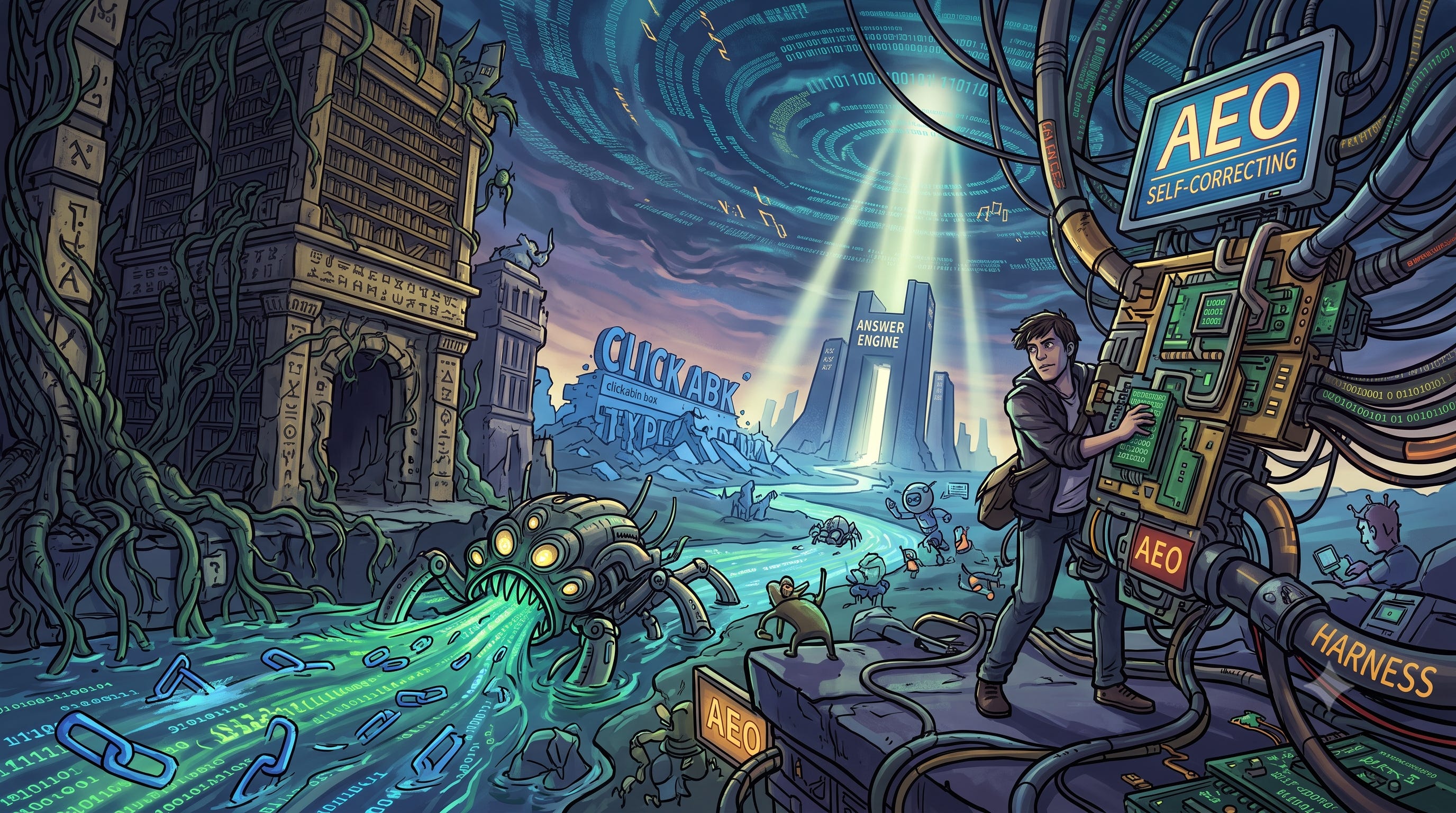
The AI developer revolution makes code free, but we are drowning in technical debt as traditional engineering guardrails snap under the pressure of synthetic syntax.
Microsoft is rewriting TypeScript’s compiler in Go to fix build times, while Bun used Claude agents to port half a million lines of Zig to Rust in six days, leaving thousands of un-audited unsafe blocks for humans to clean up.
AI-generated code turns reviews into rubber-stamping theater, human validation into an exhausting bottleneck, and completely breaks developer experience metrics.
In AI news, we’ve entered the “harness and infrastructure” era. While OpenAI drops GPT-5.6 into Microsoft 365 and Anthropic builds “off switches” for dangerous model knowledge, developers are focusing on loop engineering, agent identity layers, and Cloudflare’s new pay-per-crawl protocols.
As models commoditize, the engineering battle moves to the execution layer—building self-improving harnesses and inter-agent protocols like MCP so autonomous agents function smoothly.
Marketing and technical strategy have merged for survival. Orbit Media’s analysis of over 560,000 requests confirms that AI crawlers devour homepages to train models but leave deep blog articles stranded in a “Dark Library” with zero referral traffic.
Because bots take everything without giving back, generic commodity content is dead. To avoid getting squeezed out by search engine summaries that don’t cite you, you must build expert-backed “non-commodity” content and optimize for Answer Engine Optimization (AEO).
Happy reading.
PLEASE🙏 Should you find emails from SWIPE unwanted or annoying, unsubscribe. If you’re interested in learning how and when you might end up in SWIPE and what you can expect in the future, check it out here.
⚙️Dev stuff
👍Bun in Rust - An architectural post-mortem detailing Bun’s strategic engineering migration from Zig to Rust.
Announcing TypeScript 7.0 - A major release announcement showcasing TypeScript 7.0’s native Go-powered type-checker port, delivering drastically faster build times and native isolated declarations for large-scale codebases.
SolidJS 2.0: A React Developer’s First Look - A hands-on technical breakdown comparing SolidJS 2.0’s fine-grained reactivity and signal primitives against classic React render cycles and state management hooks.
OpenCode Drive: The Journey of Building an Open Source AI Code Engine - A retrospective documenting the design choices, local model integrations, and context-assembly patterns behind building a fully open-source developer coding assistant.
Every AI-generated line of code is a small loan, and eventually you have to pay it back - A sobering software engineering critique arguing that uncritical reliance on LLM code generation accumulates compounding technical debt.
Code review is theater now - An operational reflection examining how automated AI pull requests have overwhelmed legacy code review workflows, turning PR approvals into passive rubber-stamping exercises.
A Practical Guide to Reducing Token Spend - A tactical developer guide sharing concrete techniques for prompt compression, dynamic context pruning, and model-routing optimization to slash LLM API overhead.
👀Introducing Crystallize Plugins and Marketplace - A product announcement detailing Crystallize’s new extensible marketplace architecture, enabling seamless third-party app integrations and custom backend plugins for headless commerce.
Of Forks, Clones, and Package Management in the Age of AI - An analysis of how AI-driven code generation is shifting open-source dependency management away from centralized package registries toward localized, AI-maintained inline forks.
The Pulse: What can we learn from the latest AI developer productivity data? - A data-driven analysis evaluating real-world engineering metrics to separate actual software delivery velocity gains from inflated AI tool marketing hype. By Gergely Orosz.
🤔Designing APIs for Agents - An architectural opinion piece outlining how backend API design must evolve from human-readable REST layouts toward deterministic, strongly typed, and self-documenting agent interfaces.
Staying Familiar with the Code When It’s Written by an LLM - An engineering management playbook sharing team habits and refactoring routines to prevent developer domain disconnect when AI tools write the bulk of the codebase.
Vercel and Shopify are rebuilding Hydrogen - An announcement outlining a strategic partnership to re-architect Shopify’s Remix-based Hydrogen framework for instant edge rendering and seamless deployment on Vercel’s global network.
The Human-in-the-Loop is Tired - A candid look at automated systems design, arguing that relying on exhausted human operators to manually audit high-volume AI agent decisions is an unsustainable safety strategy.
AI and Code Ownership: Who is Responsible for Generated Code? - A legal and technical breakdown exploring liability, intellectual property risks, and team accountability when AI-generated code causes production outages or license violations.
🤖AI / ChatGPT stuff
GPT-5.6 is now the preferred model in Microsoft 365 Copilot - An official release announcement highlighting OpenAI’s GPT-5.6 flagship model series integration across Office applications to deliver higher task efficiency and lower token overhead.
🤔How tech workers actually feel about AI in 2026 - An annual sentiment survey examining software industry burnout, job security concerns, and real-world adoption rates of agentic AI tools. By Lenny Rachitsky.
An off switch for dual-use knowledge in AI models - A research paper presenting GRAM, a modular training method that isolates risky dual-use domain knowledge into removable model weights.
😱LLM Burnout: Why the constant model cycle is wearing developers out - A candid reflection on the mental fatigue engineers face while constantly rewriting benchmarks, harnesses, and prompts for weekly model releases.
Fable 5 vs. Opus 4.8: Outcomes-based harness evaluation - An empirical evaluation comparing frontier model execution outputs across real-world business automation and agentic orchestration pipelines. By Vin Vashishta.
Making AI search smarter - An infrastructure update detailing Cloudflare’s new bot management tools that give site owners granular control over pay-per-crawl terms and agentic indexing.
How to create a unique visual identity - A creative guide detailing an eight-step framework for establishing a distinct visual world and taste-driven brand identity. By Sari Azout.
The Identity Layer for AI Agents is Finally Being Built - An architecture breakdown detailing how cryptographic Web Bot Auth and decentralized identity standards are securing autonomous agent-to-agent transactions.
Trigger an AI agent with an email - A hands-on tutorial demonstrating how to hook inbound email webhooks directly into serverless agent execution harnesses for background workflow automation.
A Hitchhiker’s Guide to AI - A comprehensive developer guide explaining core LLM mechanics, tool calling, MCP plugins, and practical terminal workflows for modern AI programming.
✨Claude Code vs. Codex vs. OpenCode: The honest verdict for full-stack engineers - A head-to-head benchmarking review comparing context management, latency, and code accuracy across leading developer CLI assistants.
What is loop engineering? - An engineering essay defining the discipline of structuring recursive execution loops, context retrieval, and validation checkpoints around raw LLM calls.
How Claude’s values vary by model and language - A safety research report analyzing how Claude’s underlying values shift along warmth, rigor, and caution axes depending on the language and model tier used.
A primer on self-improving agent harnesses - An architectural primer explaining how modern agent frameworks rewrite their own execution prompts and tool workflows to optimize token consumption and task completion rates. By Ben Dickson.
MCP vs A2A vs ACP: How AI agents actually talk to each other - A visual breakdown comparing the leading protocol specifications enabling local tool discovery, inter-agent messaging, and cross-platform agent execution. By ByteByteGo.
📊Marketing stuff
AI Crawling vs AI Traffic: What 560,000+ Requests Reveal - A comprehensive data analysis exposing how AI crawlers aggressively index homepages and service pages while sending minimal referral traffic back to deep informational articles.
Mutiny’s growth engine: Lessons for generalist marketers - A tactical breakdown sharing core go-to-market strategies, experimentation playbooks, and modern AI workflow implementations for high-growth B2B marketing teams. By Emily Kramer.
✨Search Smarter, Verify Faster - A curated guide highlighting practical, free web tools for tracking research trails, verifying image authenticity, and archiving live web pages. By Jeremy Caplan.
👀What Is Subscription Ecommerce? Models, Examples, and How to Build for Recurring Value - A deep dive exploring how modern recurring revenue platforms move beyond basic billing loops to manage complex access entitlements, metered usage, and long-term customer relationships.
Non-Commodity Content: How Brands Stand Out to Readers and Algorithms - An architectural content guide explaining how to shift away from easily AI-summarized generic articles toward expert-backed, proprietary research that wins search and LLM visibility.
Q2 2026 Email Marketing Benchmarks - An industry performance breakdown analyzing current email open, click, and conversion trends across B2B and e-commerce campaigns.
Why does the middle of the funnel get ignored? - An analysis examining why performance marketers routinely neglect consideration-stage buyer journeys, and how template resources or comparison lists rebuild mid-funnel conversion rates. By Media, Ads + Commerce.
Comprehensive Guide to Campaign Optimization - A practical marketing framework detailing how to audit, test, and continuously iterate live multi-channel campaigns to maximize overall ROI.
AI Prioritization Framework for SEOs - A structured decision-making tool helping digital search strategists cut through AI hype and focus resources on high-impact, achievable technical optimizations.
How to Build Content Pillars for Your Social Strategy - A step-by-step branding guide mapping out how to organize core content themes to maintain publishing consistency and boost audience engagement across social feeds.
Stripe vs. PayPal: A Comparison for Modern Tech Stack Teams - A head-to-head architectural comparison evaluating developer experience, global checkout flexibility, fee structures, and API integration capabilities between two payment giants.
SaaS AI Search Optimization: A Complete GEO & AEO Strategy Guide - A specialized SEO guide detailing how SaaS companies can optimize their brand presence, documentation, and authority signals for generative search engines and AI answer engines.
The Ultimate Guide to Referral Marketing - A practical marketing overview sharing proven frameworks, incentive structures, and messaging tactics to turn existing customers into active acquisition channels.
¯\_(ツ)_/¯
🛠TOOL you should check out: 🤘OpenSEO is an SEO tool for the people. If tools like Semrush or Ahrefs are too expensive or bloated, OpenSEO is a pay-as-you-go alternative that you actually control.
🎸LISTEN TO:
Happy reading /bookmarking!
If you enjoyed these, please SUBSCRIBE, recommend 👏 and share to help others find us! Let us know what you think in the comments section below.
🐦Follow SWIPE on TWITTER